
Ask people outside the industry what makes a data center project hard and they will usually talk about construction. Construction matters, but it is rarely what kills a project. Projects die earlier, on the power, the permits, the long-lead equipment and the customer who will not sign until someone else does.
Each of those four items has its own clock, and none of them runs on the construction schedule. A project that treats them as tasks to finish after the design is done will find, again and again, that the building is ready before the project is. This note walks through where each item goes wrong and what it takes to get it right.
Power comes first
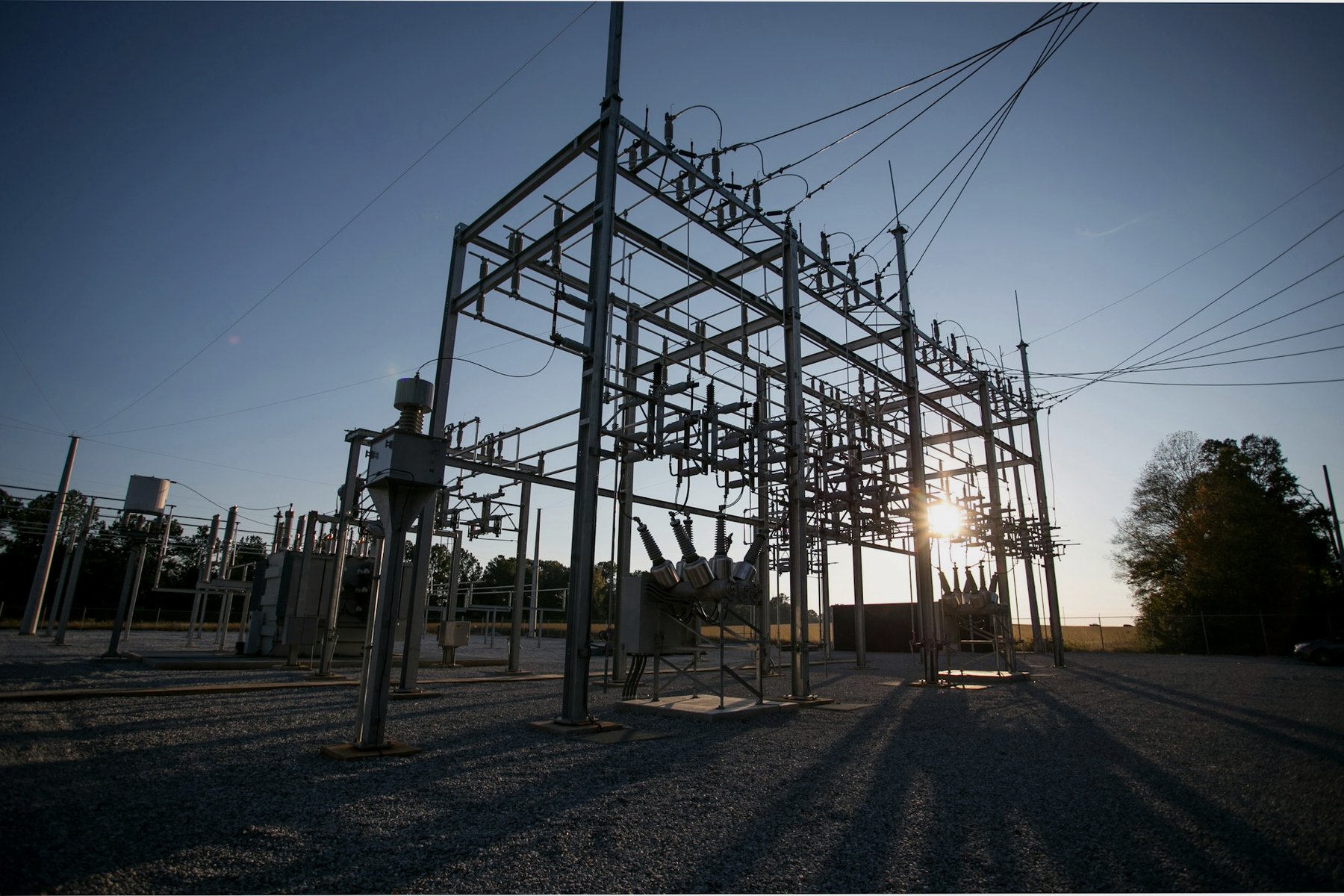
A data center is an electrical project that happens to have a building around it. Before anything else, a site needs a credible path to utility power at the capacity and timing the customer requires. In many markets, that path runs through a utility's interconnection process, substation upgrades and transmission work that can take longer than the building itself. A site with land, fiber and zoning but no power date is not a site. It is an option.
That is why UpManagement Keystone treats power as the first diligence item, not the last. The questions are concrete: what capacity is available, when, at what voltage, with what redundancy, and what has to be built by whom to deliver it.
A site with land, fiber and zoning but no power date is not a site. It is an option.
What a credible power path looks like
A credible power path is more than a letter saying a utility is willing to serve. It is a sequence of commitments, each with an owner and a date. Consider a hypothetical site on the edge of a growing metro. The land is zoned, two fiber routes pass along the road and the county is supportive. The nearest substation, however, is already close to its limits, and the utility has a queue of other large loads asking for service.
On that site, the real schedule depends on questions the brochure does not answer. Will the utility expand the existing substation or build a new one? Who pays for it, and who owns it afterward? Does the transmission line feeding the substation need work, and does that work need its own approvals? Can the utility deliver part of the load early and the rest later, so the first phase of the building can open while the full capacity is still being built?
Good diligence turns those questions into a written power plan before the land is committed. The plan usually covers:
- The capacity the utility can deliver at each stage, and the date it expects to deliver it.
- The upgrades required on the utility side and on the site side, and who funds and builds each one.
- Whether service can come from more than one feed or substation, so the site is not exposed to a single upstream failure.
- The study and agreement steps still outstanding in the utility's process, and what could move each one.
- On-site measures that can bridge gaps, such as phasing the IT load to match the delivery schedule.
None of this guarantees a date. Utilities are working through more large-load requests than their planning processes were built for, and timelines can move. But a project with a written power plan knows where its risk sits. A project without one is guessing.
Permits and the local conversation
Data centers are increasingly visible to the communities around them. Noise, water use, generator permits, traffic during construction and the tax treatment of the facility are all part of the local conversation. Projects that arrive with answers on those topics move faster than projects that arrive with renderings.
Each topic has a technical answer, and the answer shapes the design. Noise depends on where cooling equipment sits, how it is screened and how generators are tested. Water use depends on the cooling approach: systems that reject heat through evaporation use water in a way that closed-loop and air-cooled systems largely do not, with tradeoffs in energy use. Generator permits depend on the number and size of units, their emissions controls and how often they run for testing. A team that has made those choices deliberately can explain them. A team that has not will be asked to go back and make them under a deadline.
The local conversation is also about trust. Neighbors and local officials want to know who will operate the building after it opens and who they should call if something goes wrong. An owner that also operates its facilities can give a direct answer, because the people making promises during permitting are the same organization that will keep them for the life of the building.
Long-lead equipment
Generators, switchgear, transformers and cooling plant can carry lead times measured in many months. A schedule that assumes equipment will be available when the shell is finished is a schedule that will slip. Procurement has to start as early as the design allows, with specifications chosen so that equivalent equipment from more than one manufacturer will work.
That last point is easy to say and hard to do. Engineers naturally design around equipment they know, and a specification written around one manufacturer's product can leave a project with no alternative when that manufacturer's production slot moves. Writing performance-based specifications, confirming that the electrical rooms and pads can accept more than one vendor's footprint, and qualifying alternates early all cost time at the start of a project. They save far more time at the end.
Procurement also needs a plan for the equipment once it arrives. Large electrical gear needs a place to be stored, protected and tested before installation. Factory witness testing, where the owner's team checks major equipment before it ships, catches problems while they are still the manufacturer's to fix. Finding a defect after the gear is set in place costs weeks.
The buyer who will not go first
Finally, there is the customer. Many enterprise and government buyers prefer not to be the first tenant in a new facility. They want to see the building commissioned, the systems tested and someone else's workload running. A developer has to plan for that, with a phased build, a commissioning plan the customer can inspect and an operating team in place before the first lease is signed.
This is a rational position. A customer moving a critical workload is taking a real risk, and the evidence that reduces that risk only exists after the building is finished. The developer's job is to produce that evidence as early as possible and make it easy to inspect: commissioning scripts and results, the staffing plan for the operations team, maintenance procedures and the escalation path during an incident.
Phasing helps on both sides. A first phase sized to be filled in a reasonable time lets the building prove itself while later phases are still under construction. It also means the developer is not carrying the cost of a full building's worth of equipment while it waits for the first signature.
Common mistakes
The projects that struggle tend to make the same handful of errors. None of them is exotic. Each comes from treating one of these items as somebody else's problem, or as a problem for later.
- Buying land on the strength of fiber and zoning, and starting the power conversation afterward.
- Designing first and talking to the community second, so that noise, water and generator choices have to be revisited.
- Writing equipment specifications around a single manufacturer, with no qualified alternate.
- Treating commissioning as a construction closeout task rather than as the evidence a first customer will rely on.
- Hiring the operations team after the building is finished, when the first customer wants to meet them before signing.
Each comes from treating one of these items as somebody else's problem, or as a problem for later.
The common thread is sequence. Every one of these items is solvable. What makes them fatal is discovering them late, after money has been committed on assumptions that turn out not to hold.
How Keystone works through it
UpManagement Keystone develops, owns and operates its facilities. That combination changes how the early work is done. Because the same organization will run the building, the operating team has a voice in the design, the commissioning plan and the maintenance approach from the start. Because the company will own the building for the long term, it has every reason to resolve power, permitting and equipment risk before committing capital rather than after.
Keystone also draws on the UpManagement shared-services platform for finance, legal, compliance and technology support. Utility agreements, permit conditions and long-lead purchase orders are legal and financial commitments as much as engineering ones, and having those disciplines in the same room early keeps the project from learning about a problem from a contract it already signed. Progress is reported monthly against the same five measures every UpManagement company uses, including capital spend against plan, so slippage is visible early.
None of this is new to experienced operators. It is simply where the work is. Keystone's job is to get each of these items resolved early, in order, so that construction becomes the predictable part of the project.
Published by UpManagement. This article is general information about the sectors in which the UpManagement companies operate. It is not legal, tax, investment or compliance advice, and it is not an offer to sell or a solicitation of an offer to buy any security. Where a company is described as a platform in formation, its approvals are not yet in place.